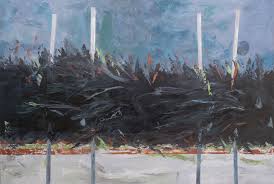
183. I Said To Love
Thomas Hardy is one of my favorite authors.
The reason is that the first book I read outside the coursebook was Hardy's.
And it was my girlfriend in Kanpur who gave me the book titled “Desperate Remedies”. In fact, she introduced me to English literature because I was a science student.
First published in 1871, Desperate Remedies is regarded as a sensational novel for its themes of bigamy, lesbian love, and illegitimacy.
I have absolutely no idea what was in that book now, because I read it only because I was determined to, whether I understood the story or not. It was like your first swimming lesson.
Today, I will share Thomas Hardy’s poem ‘I Said To Love’, which offers a different perspective on love.
I remember my girlfriend’s words that this is the ultimate poem of love, and that Hardy wrote it in memory of his wife, Emma Lavinia Gifford, who died in 1912. Many of his love poems were written for Emma to mourn her loss.
Thomas Hardy struggled to cope with Emma’s death, even after marrying Florence Emily Dugdale in 1914.
Read the poem that has agony, depression, and loss -
I said to Love,
"It is not now as in old days
When men adored thee and thy ways
All else above;
Named thee the Boy, the Bright, the One
Who spread a heaven beneath the sun,"
I said to Love.
I said to him,
"We now know more of thee than then;
We were but weak in judgment when,
With hearts abrim,
We clamoured thee that thou would'st please
Inflict on us thine agonies,"
I said to him.
I said to Love,
"Thou art not young, thou art not fair,
No faery darts, no cherub air,
Nor swan, nor dove
Are thine; but features pitiless,
And iron daggers of distress,"
I said to Love.
"Depart then, Love! . . .-
Man's race shall end, dost threaten thou?
The age to come the man of now
Know nothing of? –
We fear not such a threat from thee;
We are too old in apathy!
Mankind shall cease. - So let it be,"
I said to Love.