209. And no one was left to speak out for me
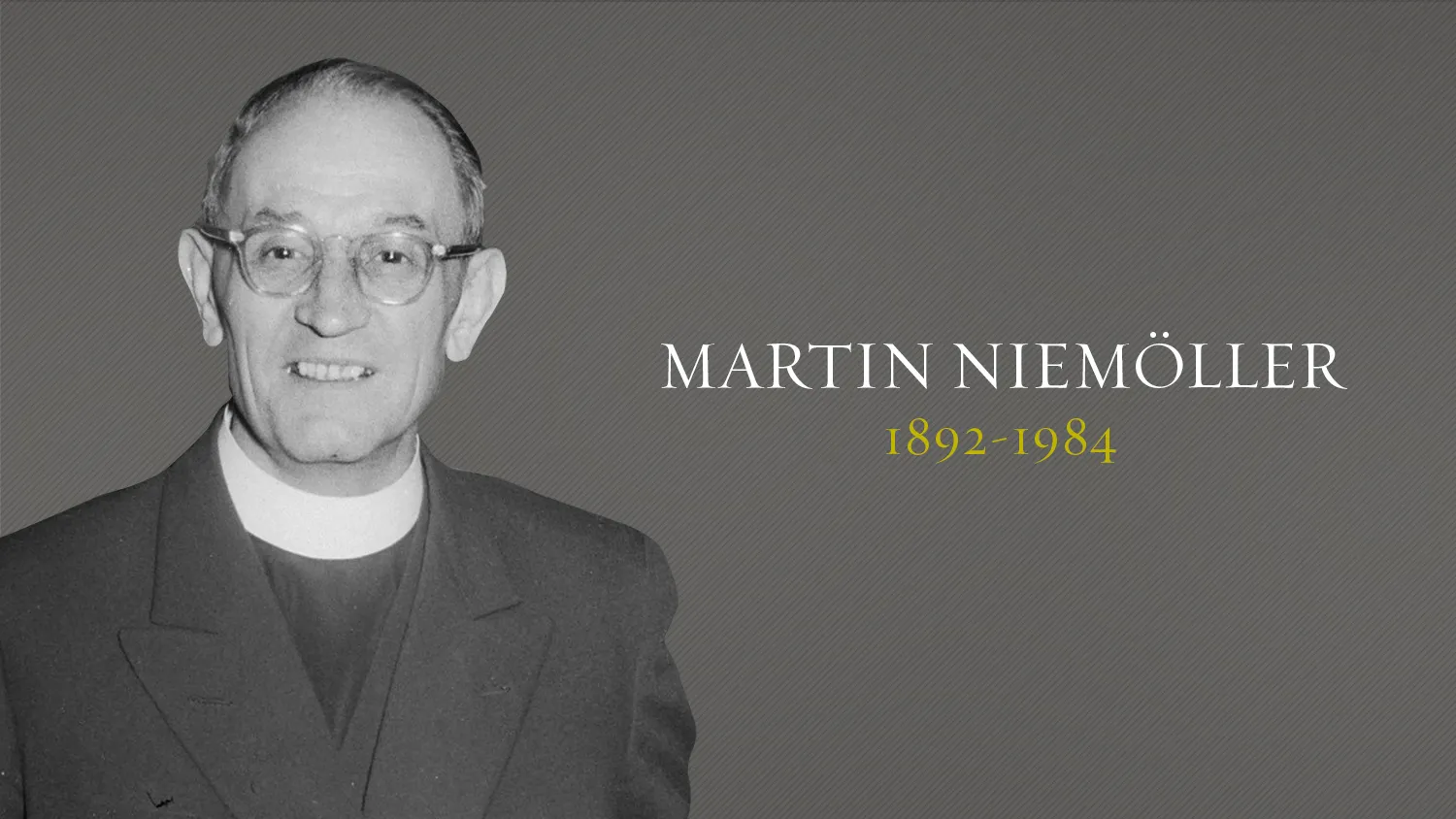
Pastor Martin Niemöller (1892 - 1984) is renowned for writing First They Came, a well-known poem about the Holocaust.
It summarizes his life and leaves an imprint on the reader even today. It is a poem for the ages.
However, I find his personality very complex. In fact, he remained a controversial figure throughout his life.
Originally an antisemitic Nazi supporter, he shifted his perspective after being imprisoned in a concentration camp for opposing Nazi influence over churches.
Born in Lippstadt, Germany, he was the son of a priest. In 1910, he joined the German Navy and eventually became its commander, but later followed his father’s path and began priestly training in 1920.
The 1920s were a challenging period for many in Germany, and like others, he believed the Weimar Republic couldn't effectively address the ongoing economic and political issues.
This led to the emergence of radical political groups like the Nazis. During the Great Depression starting in 1929, many Germans faced hardships, as businesses closed and unemployment became widespread.
In the early 1930s, Adolf Hitler's Nazi Party grew more popular. They attributed the nation’s problems to Jews, foreigners, and the fragile Weimar government, promising to better the lives of ordinary citizens.
Niemöller was among the Nazi Party’s early supporters. He continued to strongly support Hitler despite the party’s hatred and discrimination against Jewish people and other groups. He also personally held antisemitic beliefs and, during the 1930s, described Jews as a ‘despised people’ and ‘Christ killers’.
He also saw the Nazi Party as a way for Germany to restore its Christian morals, occasionally calling Hitler an ‘instrument sent by God’. However, following his 1934 meeting with Hitler, he started to view the Nazi state as a dictatorship.
Niemöller’s opposition to the Nazi regime’s church policies led to his arrest and transfer to Dachau concentration camp, where he remained for most of the war until American forces liberated him in April 1945.
After the war, Niemöller led a group of German churches that acknowledged they had not done enough to oppose the Nazi regime.
Niemöller was one of the few Germans who called on his fellow citizens to admit their part in Nazi crimes. In a sermon, he stated: ‘We must openly acknowledge that we are not innocent of the Nazi murders, including those of German communists, Poles, Jews, and others in occupied countries... This guilt weighs heavily on the German people and the German name, and even on Christendom. For these acts have been carried out in our world and in our name.’
But his reputation was severely damaged when it was revealed that he had written to the German Navy in 1938 and 1941, volunteering for military service while imprisoned.
However, his imprisonment turned him into a symbol of Christian resistance against the Nazi regime.
Niemöller’s poem has motivated people worldwide to advocate for others facing discrimination.
Read the poem here -
First they came for the Communists
And I did not speak out
Because I was not a Communist
Then they came for the Socialists
And I did not speak out
Because I was not a Socialist
Then they came for the trade unionists
And I did not speak out
Because I was not a trade unionist
Then they came for the Jews
And I did not speak out
Because I was not a Jew
Then they came for me
And there was no one left
To speak out for me