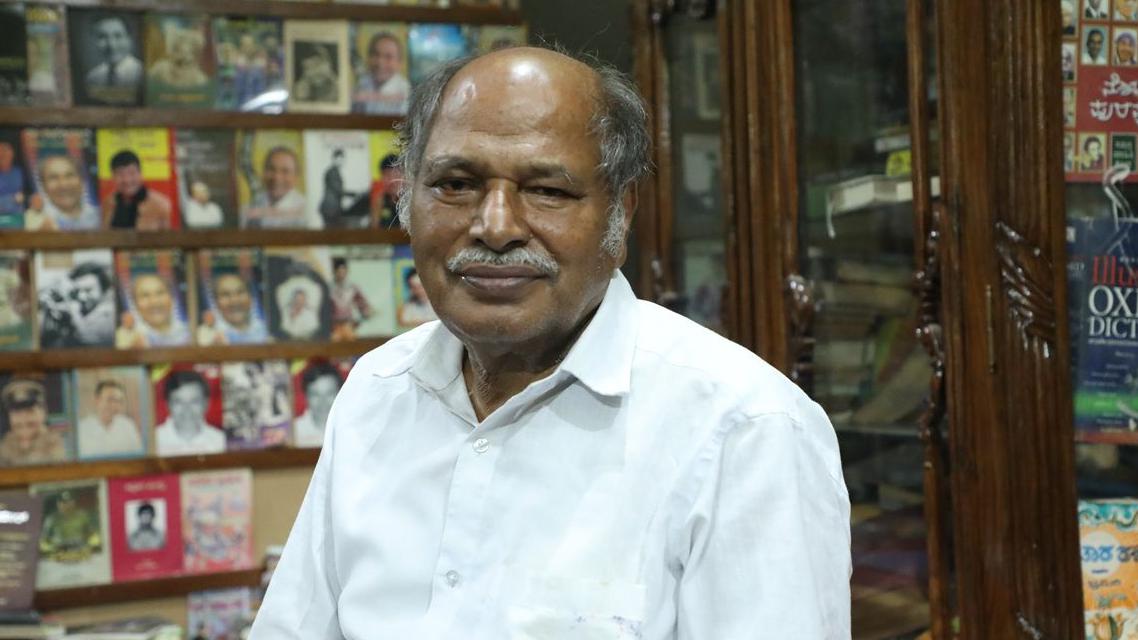
193. Anke Gowda and his collection of two million books
We hardly come across such comforting news in the Indian media. Today it came from the BBC.
It is all about Anke Gowda—a man we should all take pride in having in our country, a man who has collected two million books over fifty years. His vast collection is housed in a large building and is freely available for anyone to borrow and read.
His library remains open every day for extended hours. Although it lacks a librarian and the strict organization typical of libraries, with books stacked randomly on shelves and the floor, it boasts an impressive collection, including rare editions and books on nearly every subject.
His library is popular among students, teachers, and book enthusiasts. Regular visitors are familiar with its layout and can easily locate the books they want. If they struggle, they trust Gowda to find anything they need.
Gowda’s achievement would have gone unnoticed, as it was, for 50 years to the broader public. So, the present government needs to be congratulated for bringing such a good man as the 79-year-old Anke Gowda into the public eye by awarding him the Padma Shri for his extraordinary contribution to promoting literacy and learning.
You hardly take the Padma Awards seriously, which are displayed on the walls of bootlicker journalists and those Gandhi family friends in Bollywood. But here you have to.
Anke Gowda is a retired worker from a sugar factory. Earlier his library in Pandavapura, a small town in Mandya district, Karnataka, was an extension of his home. But now the geography has changed as Gowda, his wife, and son live in a quiet, small corner of the library.
In his library, there are sacks containing an estimated 800,000 books, still awaiting unpacking. The collection continues to grow through Gowda's purchases and donations from others.
As a child and during his growing-up years, Gowda never had books to read, but he was always curious about them and kept thinking that he should read, gather books, and gain knowledge.
Belonging to a farming family for whom books were once a luxury, it was his sheer determination that enabled Anke Gowda to achieve such a feat, although such acts are never given any importance in India. Even people consider such a person a fool and hardly give them any recognition.
The story began when one of his teachers inspired him to build a home library, so he often spent the money his parents gave him for food on books instead. After finishing school, he began working as a bus conductor. However, when the teacher learned that Gowda had stopped studying, he urged him to resign and attend college. Gowda took this advice, earned a postgraduate degree in Kannada, and then joined the Pandavapura sugar factory as a timekeeper.
He allocated two-thirds of his monthly salary to books, with the rest for groceries and essentials. He also increased his income by raising cows and selling milk, in addition to working as an insurance agent.
It was Hari Khoday, the late liquor baron, who, upon hearing of Gowda, visited, saw the books for himself, and offered money. Gowda told him he didn't want any money and that his only request was for him to build a library. Khoday agreed to finance the construction of a large building, now part of Gowda's extensive library.
The first government attention came when the then Chief Minister, HD Kumaraswamy, visited the library and authorized funds for the construction of two additional structures attached to the first one.
Gowda reflects on the library's future, urging others to carry on his legacy. “I have fulfilled my responsibility. But I don't have the energy anymore. Maybe the government and the public can take over now? I have done my best. Now it is up to others.”
I wish the government would take over the library, name it the Anke Gowda Reading Library, and assign its administrative control to the nearby University.