311. Immigration and the beaches of Normandy
On June 6, 1944, a significant turning point in World War II occurred when Allied forces launched a daring amphibious invasion on the beaches of Normandy, France. It was the largest seaborne invasion ever.
History remembers it as the Normandy Landings. Codenamed Operation Neptune and often called D-Day, the operation marked the start of the liberation of France and Western Europe, setting the stage for Allied victory on the Western Front.
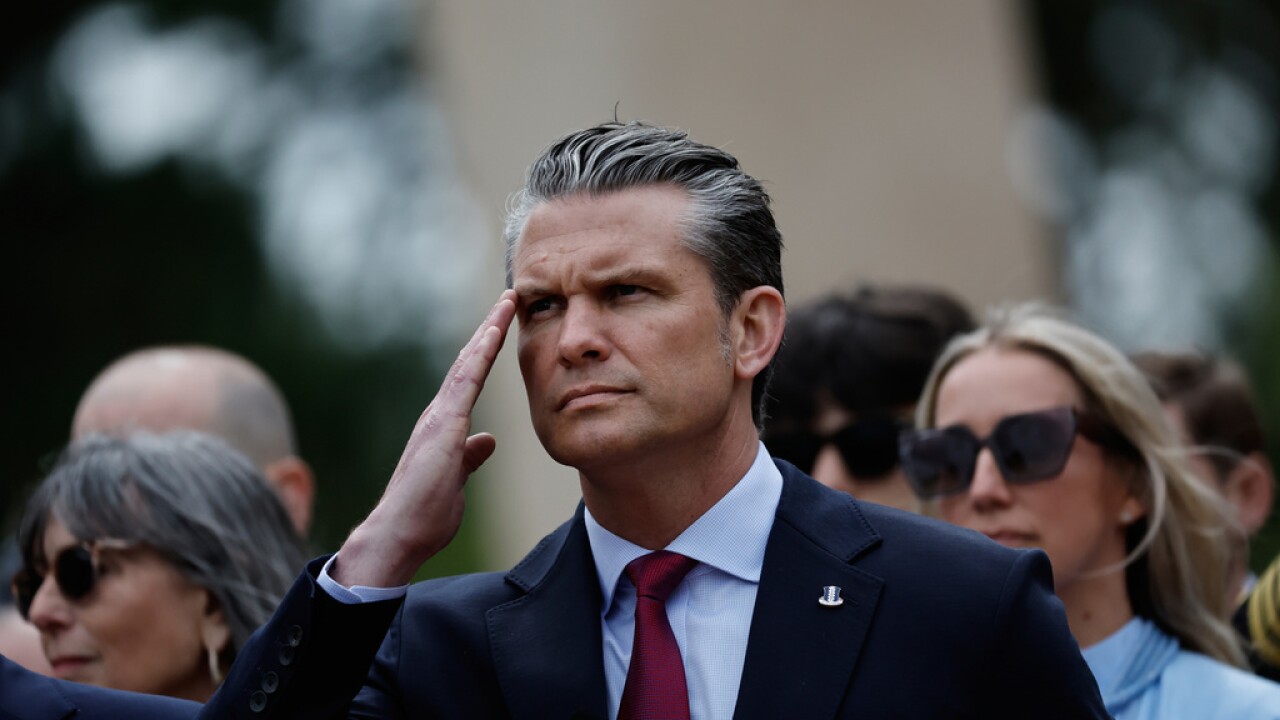
Now on its 82nd anniversary, US Defense Secretary Pete Hegseth has created a storm by trying to link immigration to D-Day, saying that Europe was facing a different “invasion” of its shores.
Although he was right, he forgot that the D-Day invasion wasn’t a literal invasion but an operation to free France from the Nazis. But that’s the way Hegseth creates controversy to stay in the news. I know he does it deliberately; otherwise, he is not a fool.
First, a little bit about the operation. Approximately 160,000 Allied troops landed in Nazi-occupied France on the night of June 6, 1944, and carried out the largest combined air, land, and sea invasion in history, facing immense challenges.
After the German Army invaded the Soviet Union in June 1941, Joseph Stalin began pressing his new allies to open a second front in Western Europe. However, British Prime Minister Winston Churchill persuaded US President Franklin D. Roosevelt to postpone it because the Allies lacked sufficient forces for such an operation.
Now, going back a year, in fact, by 1943 Soviet forces were on the offensive and had won a major victory at the Battle of Stalingrad. The decision to launch a cross-channel invasion within the next year was made at the May 1943 Trident Conference in Washington. At the Tehran Conference in November 1943, Roosevelt and Churchill promised Stalin that they would open the long-delayed second front in May 1944.
But it took months of planning and training because the planners needed specific conditions for the moon's phase, tides, and time of day. Only a few days each month were suitable. A full moon was preferred because it provided illumination for pilots and produced the highest tides. This timing improved obstacle visibility on the beach and reduced soldiers' exposure in the open.
On the German side, Field Marshal Erwin Rommel commanded German forces and was already tasked with fortifying the Atlantic Wall in anticipation of an invasion, while Major General Dwight D. Eisenhower commanded Allied forces.
The target 80-kilometer stretch of the Normandy coast was divided into five sectors: Utah, Omaha, Gold, Juno, and Sword. An extensive war plan was in place for each sector.
The invasion began just after midnight on June 6, with naval bombardments, followed by an airborne assault involving American, British, and Canadian troops. In total, about 7,000 vessels from Britain, the U.S., France, the Netherlands, Norway, and Poland were involved.
During the operation, approximately 73,000 U.S. troops, 61,700 British troops, and 21,400 Canadian troops landed on Juno Beach.
By the end of the day, the Allies had not met all their objectives and incurred approximately 10,000 casualties, including killed, wounded, and missing in action: 6,603 Americans, 2,700 British, and 946 Canadians. German casualties have been estimated at 4,000 to 9,000.
Nevertheless, Allied forces had secured the Normandy beachhead, and their fragile foothold strengthened over the following days and weeks, setting the stage for victory in Europe.
Since then, June 6 has been a day of remembrance for the people of all those countries whose men participated in that battle and never returned.
On a bluff overlooking Omaha Beach in northwestern France, the Normandy American Cemetery and Memorial is the final resting place of more than 9,300 American service members. The Walls of the Missing bear the names of more than 1,500 missing service members. Forty-five sets of brothers are buried at the cemetery, including 33 who lie side by side. A father and son also rest together.
Hegseth spoke at the Normandy American Cemetery during commemorations. He said, “Sadly, today, different European beaches are stormed by different, dangerous ideologies. Beaches in Spain, Italy, Greece and Bulgaria, boats and men arrive. When will European capitals do something about that invasion, or is it too late? I pray not, and I believe not. The men who fought and died here restored freedom to Europe. That freedom must be maintained by this generation of leaders and war fighters.”
Some people are accusing him of desecrating the memory of the soldiers who stormed the beaches of Normandy after he sought to link immigration to the D-Day anniversary.
Although the US has a higher proportion of foreign-born residents than the EU, Trump is aware of this issue, but he frequently criticizes how migration impacts the continent.
Immigration is a hot topic today following the murder of Henry Nowak, an 18-year-old British student who was stabbed to death in the UK. Nowak’s attacker was a British-born Sikh.
US Vice President JD Vance also joined the discussion with a social media post blaming immigration for the UK murder. British Prime Minister Keir Starmer condemned Vance’s remarks, saying both Nowak and his killer were British.
He is right, but the killer was the son of an Indian migrant who was allowed to have a kirpan. Rules regarding British citizenship should apply to the killer, not on the basis of his religion. This is nothing more than appeasement politics.
Hegseth has built a negative reputation for himself. Before his visit to France, an environmental advocacy group issued a press release stating, “This individual promotes values that oppose democracy, human rights, and peace. He must be confronted for who he is and the values he stands for: colonial, warmongering, racist, far-right beliefs.”
However, this is the first time I agree with Hegseth, and I feel what he said is right.
Europe is really facing a different kind of invasion along its shores. No major European country is safe, as Islamic terrorists are making it their safe haven.
Every time, you should not be politically correct, as Anders Åslund, a Swedish economist, wrote on social media. “‘We stand by our allies!’ No, you don’t. You just attacked them. Immigration policies are internal matters.”
In December, the Trump administration’s national security strategy warned that Europe might face civilizational erasure and become unrecognizable within twenty years. That’s the reality.
Hegseth is not a politician; he was a commentator and will remain one. His speeches are outbursts that are sometimes very harsh, bad, and incorrect, but he says what he feels.
And he is not always incorrect. He addresses what the moment requires. This time, Europe needs to pay attention to him. Keeping a blind eye to the reality will only harm Europe.