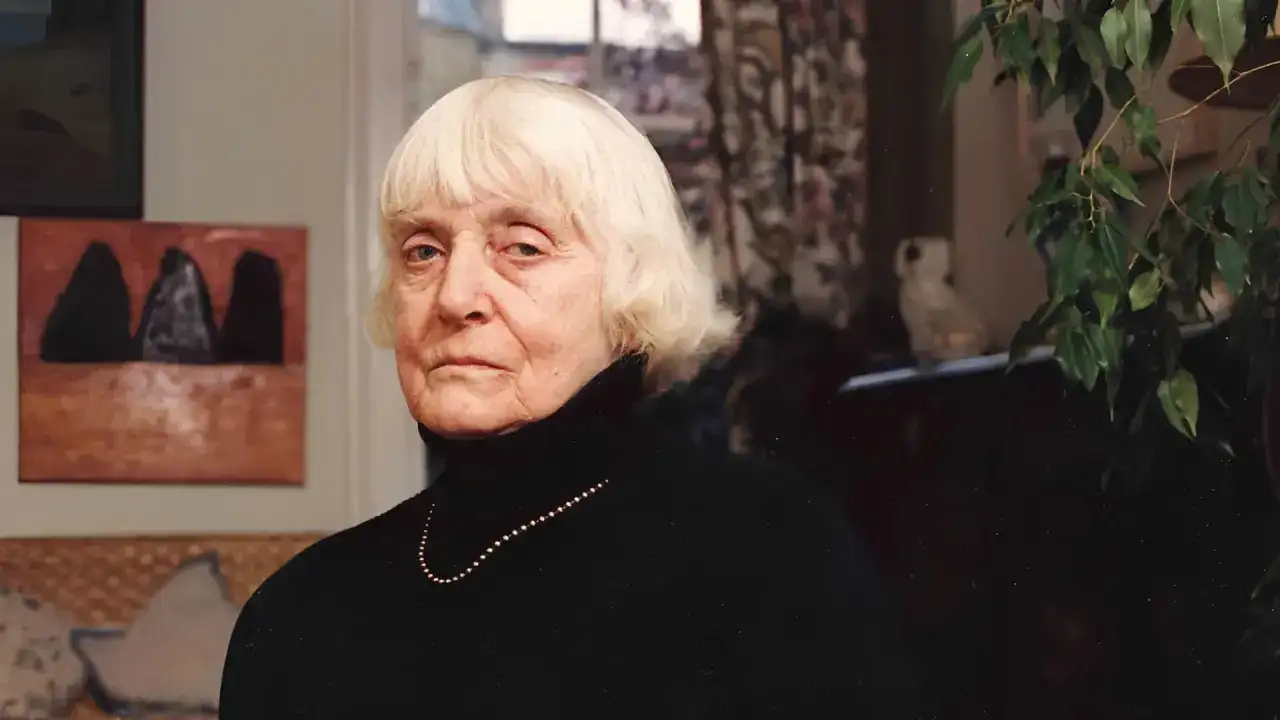
303. Remembering Maureen Patricia Duffy, the queen of activism
Maureen Patricia Duffy, the English poet, playwright, novelist, non-fiction author, and pioneering advocate for gay writers’ rights, died two days ago, on May 27, at the age of 92.
A friend gifted me her book, “England: The Making of the Myth from Stonehenge to Albert Square,” a page-turning narrative history of how the myth of the English was constructed. In this fascinating study, Duffy surveys three thousand years of English and British history, illuminating the myths that have become an important part of England’s national identity.
But she is best known for her landmark 1966 novel, The Microcosm, inspired by London's Gateways, a lesbian club, and for another novel, Restitution, which was longlisted for the Booker Prize in 1998.
In 1972, Duffy co-founded the Writers’ Action Group, which spearheaded a campaign for a public lending right. This campaign led to legislation in the late 70s that enabled authors to receive payment whenever their works were lent through libraries.
She was a founding member of the Authors’ Licensing and Collecting Society, an organization dedicated to ensuring authors are compensated for secondary uses of their works. For decades, she championed fair remuneration and proper recognition for creators with remarkable passion and conviction.
She studied at King’s College London, which would later inspire her novel Capital, the second in her London trilogy.
I have read her semi-autobiographical first novel, That’s How It Was, which details the feelings of a young girl whose father abandons her mother when she is born.
Duffy also wrote for stage, screen, and radio, as well as poetry collections. She is considered the first woman to earn a living by writing.
Duffy was the first openly gay woman in British public life prior to the decriminalization of male homosexual acts in 1967. She also published The Ballad of the Blasphemy Trial, a pamphlet criticizing the notorious trial of Gay News newspaper for blasphemous libel.
She was the first President of the Gay Humanist Group and a patron of the British Humanist Association (Humanists UK).
Duffy read her poems at LGBT events, and in 1995, Gay Times named her among the 200 most influential lesbian and gay people in Britain.
Modern-day activists who have turned activism into a profession, now that funding is easier to secure, might not realize that Duffy was a vegetarian and animal rights advocate.
In 1970, she, along with Elizabeth Taylor and others, signed a letter to The Times pledging never to wear fur. Duffy elaborated on her views in her book Men & Beasts: An Animal Rights Handbook.
I liked her poetry more and wanted to read her book “Londoners, an elegy,” but couldn’t get it anywhere.
I am also fascinated by how much a writer can produce in a lifetime while being active on so many fronts. Her devotion to her craft and her work on so many levels will never be forgotten.
RIP Maureen Patricia Duffy. You will always be remembered for your frankness and your pioneering works.