215. The Iran-US historical connection
Few will recall that in March last year, U.S. Director of National Intelligence Tulsi Gabbard stated that U.S. intelligence agencies believe Iran is not developing a nuclear weapon, and that Supreme Leader Ayatollah Khamenei has not authorized the nuclear weapons program he halted in 2003.
I also refuse to accept that Donald Trump was unaware of this statement. But this was not the first time the U.S. has changed its policy toward Iran.
While connecting the dots, we learn that the Pahlavi dynasty began in 1925, when Reza Khan, a military officer, was promoted by British General Edmund Ironside to lead the British-run Persian Cossack Brigade.
By 1923, much of Iran was already under British control. The British government compelled the Majlis, Iran's legislative assembly, to oust the ruling Qajar dynasty and, on December 12, 1925, to crown Reza Pahlavi as Shah of Iran, in accordance with the Persian Constitution of 1906.
Pahlavi intended to declare the country a republic, following Mustafa Kemal Atatürk's approach in Turkey, but he abandoned the plan due to opposition from British and clerical sources.
The dynasty ruled Iran as an autocratic monarchy until 1941, when it was exiled by the British following the Anglo-Soviet invasion of Iran.
And then a brief pluralistic period began in Iran, and Mohammad Mosaddegh became Iran’s elected prime minister.
In 1953, Mosaddegh suddenly nationalized Iran's oil industry, a move that was a major blow to the UK, which controlled it. The UK, in a panic, appealed to the US for assistance.
So, if we go back to the Iran-US relationship, the first recorded association dates back to 1953. Before that, the U.S. had no interest in Iran.
The administration of then-U.S. President Dwight Eisenhower assigned responsibility to the CIA, which launched a campaign to topple Mosaddegh's government. The CIA ensured that the Prime Minister Mosaddegh was imprisoned and later confined to house arrest until his death in 1967.
With CIA assistance, the coup enabled the son of Reza, Mohammad Reza Pahlavi, to consolidate power. Interestingly, the CIA acknowledged its involvement in the 1953 coup only in 2013; prior to that, it denied any role in the coup.
In early 1979, following months of protests by Islamists and leftists against Pahlavi's authoritarian regime, he fled Iran and relocated to the United States. The demonstrations were led by Ayatollah Ruhollah Khomeini, who had been in exile in Paris since Pahlavi expelled him in 1964.
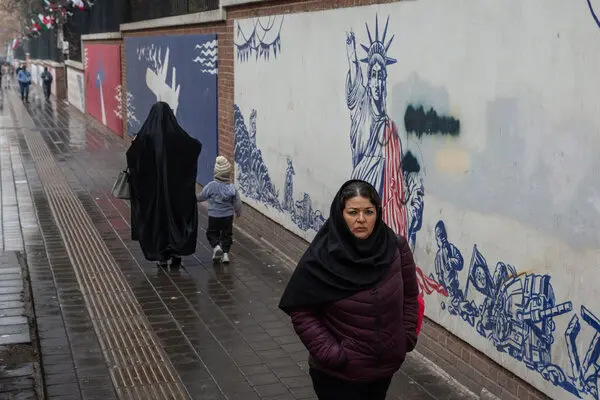
Khomeini returned from exile on January 31, 1979, and became Iran's supreme leader. He then established a strict theocratic government and condemned America as the Great Satan.
On his call in November 1979, a group of Iranian students stormed the U.S. embassy in Tehran and captured 66 Americans.
President Jimmy Carter initiated a rescue operation, codenamed Operation Eagle Claw, which failed to secure the release of all the hostages. On January 20, 1981, the day President Ronald Reagan was inaugurated, the remaining 52 hostages were released after 444 days in captivity.
It was made possible through backdoor negotiations, as Reagan's administration sold weapons to Iran, hoping it would also facilitate the release of American hostages held in Lebanon by Hezbollah, a militant group allied with Iran.
And the proceeds from the arms sales were used to fund the paramilitary Contra rebel group fighting against the socialist Sandinista government in Nicaragua. This was disclosed in 1986 by Reagan himself, and it has become known as the Iran-Contra affair.
Going forward, in 1987, during the Iran-Iraq war, when Iran began attacking oil tankers from Kuwait and Saudi Arabia—both of Iraq's financial supporters—the U.S. launched Operation Earnest Will to safeguard Kuwaiti tankers.
Meanwhile, the U.S. Navy incorrectly identified Iran Air Flight 655, a civilian plane, as an Iranian fighter jet and shot it down, killing all 290 people on board. This was a painful experience for Iranians and remains a lingering memory.
Since then, the US has been wary of Iran and considers it a dangerous country in the region that can destabilize West Asia and has the strong will to become a nuclear power. Thus began the era of sanctions, which severely affected the Iranian economy.
In exchange for the removal of punitive United Nations sanctions, Iran came on board, as the US wants to limit Iran's nuclear capabilities.
During Barack Obama’s presidency, a deal was made permitting Iran to enrich uranium for civilian energy. Iran also consented to more frequent inspections of its nuclear sites. However, in 2018, President Trump withdrew the U.S. from the Iran nuclear agreement and reinstated sanctions against Iran.
A major development occurred in 2020 when U.S. forces launched a drone strike near Baghdad International Airport, killing Major General Qassem Soleimani, a powerful figure who led the Quds Force, an elite branch of Iran's Islamic Revolutionary Guard Corps.
Again, in June 2025, the U.S. and Israeli militaries launched an assault on several Iranian nuclear sites, even as diplomatic efforts to discourage Iran from developing a nuclear weapon were underway. Trump said the strikes were a spectacular military success and Iran's key nuclear enrichment facilities were completely obliterated.
But the big question now on everyone's minds is whether he was right or Iran has already become a nuclear state.
The way Iran is responding and attacking on 11 fronts is very scary. With its meager defense budget of 10 billion, the country is taking on the US head-on, which has a defense budget of 900 billion.
It’s hard to predict how long the war will continue.