233. Iranian women will cause the fall of the Islamic Republic one day
After taking an idiotic decision and being fooled by Israel’s prime minister Benjamin Netanyahu into attacking Iran, and creating a crisis in the whole world, a desperate Donald Trump is now saying that he was considering “winding down” military operations, as “we are getting very close to meeting our objectives.”
But what objectives he has secured, no one knows except him. But today not about war.
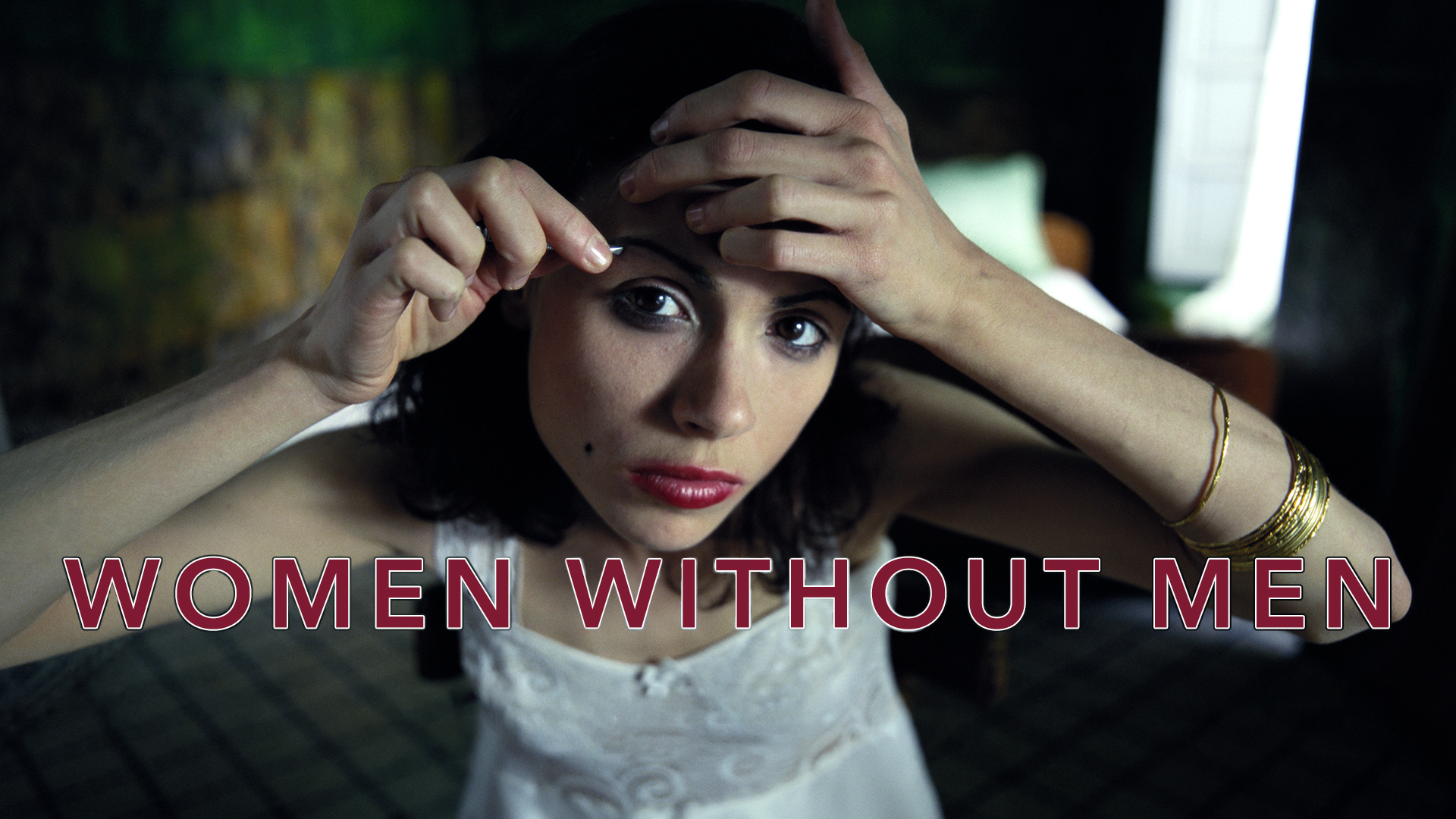
Amidst all this, this morning images from a film kept me wondering. It is the kind of cinematography you hardly get to watch. The constantly changing scenes were something I couldn’t get rid of. The film was Women Without Men.
Sometimes it happens to me, and I feel I will go mad if I’m unable to distract my mind with something else.
Long before Amazon Prime Video was launched in India in 2016, Mani Kaul, a noted figure in Indian parallel cinema, told me about this film when he was back from a film festival and spent a day at my place in Mumbai. He narrated the story in a visual format rather than in a storytelling style, and it was, in fact, all too technical. It was the first time I learned what texture actually is.
Before that, at an event at Pune Film and Television Institute of India, when Pankaj Rag was its director, he had discussed the importance of texture in a film and emphasized how it significantly increases a film’s value. It was an event when Kamal Hassan, Vishal Bhardwaj, and many others listened attentively to his informal talk, which was a kind of masterclass.
Although Women Without Men, the banned 1989 novella by Shahrnush Parsipur, was recently published in the UK for the first time and is even longlisted for the 2026 International Booker Prize, its film adaptation was released in 2009.
The film, directed by Shirin Neshat, was available on Prime Video. The Iranian writer Neshat's work explores gender issues in the Islamic world.
The book was declared anti-Islamic and explores virginity, what it means for Iranians, and how strongly it affects the lives of girls as they get the teachings of its importance: “A non-virgin woman will go to hell.”
The story is set in Tehran and explores how the policing of women’s bodies was prevalent in 1953. It was a cataclysmic moment in Iranian history when an American-led, British-backed coup d'état brought down the democratically elected Prime Minister, Mohammad Mossadegh, and reinstalled the Shah to power.
The story chronicles the intertwining lives of five Iranian women: Munis, who escapes her brother’s control by jumping from a rooftop and continues narrating after death. The reason is her tyrannical brother, Amir Khan, who wants Munis to prepare for a visiting suitor and demands that she cook dinner for them. When she scoffs at the idea, he gets angry and threatens that if she leaves the house, he will break her legs.
The pious Faezeh, whose rape shatters her faith. Faezeh secretly longs to marry Munis' brother and asks if it is true that he will marry someone else. Munis nods her head, yes.
Zarrin, a sex worker who begins seeing her clients as faceless and rushes out of the brothel, the madam calling after her.
A wealthy 50-year-old woman, Fakhri, arrives at a military event with her husband, Sadr, a general, and the two get into a marital dispute over another officer. He says that Fakhri is aging, and if she is unable to satisfy him sexually, he'll get another wife. Crying, she says she is tired of him and leaves.
Mahdokht, who fears sex so intensely she transforms into a tree; and Farrokhlaqa, who leaves her middle-class husband and buys a garden outside the city.
The garden plays an important role in advancing the story. The women converge at Farrokhlaqa’s garden, creating a temporary refuge from marriage, male control, and sexual shame.
The Iran of 1953 and of 2026 are quite two different ages. But the condition of its girls is no different. They were oppressed as they are now. We hear a lot of stories that, during Shah, it was different, but only outwardly. At home and in society, a girl's place was the same.
It is now more than three years after the “Woman, Life, Freedom” movement began, amid renewed demonstrations and brutal state crackdowns.
The photo of Mahsa Amini, which flashed across the media on 16 September 2022, is still fresh in our memory. The 22-year-old Kurdish-Iranian girl died in a hospital in Tehran under suspicious circumstances. She was brutally beaten and killed by the police, though the Law Enforcement Command of the Islamic Republic of Iran stated that she had a heart attack at a police station.
She was arrested by the Guidance Patrol, which is the religious morality police of Iran. Her crime was not wearing the hijab in accordance with government standards.
However, the girl did something unthinkable in Iran, as many female demonstrators removed their hijabs and publicly cut their hair as acts of protest.
Here, we must revisit Iran's history. On 7 March, less than a month after the Iranian Revolution of 1979, the newly appointed Supreme Leader, Ruhollah Khomeini, decreed that the hijab was mandatory for all women in the workplace and that women would no longer be allowed to enter any government office without the hijab, as they would be "naked" without it.
So, it was almost 43 years since an Iranian woman dared to defy this decree. Amini's death ignited the demands for the end of compulsory hijab laws and other forms of discrimination and oppression against women in Iran.
Amini’s death resulted in a series of protests. In Iran, the world saw, for the first time since 2009, after almost 13 years. And 476 people were killed by security forces across the country.
Coming back to the present time, there is absolutely no doubt that many Iranians wanted the end of the Islamic Republic. But now, after the Israel-US bombing, the situation has changed. On the lines of Donald Trump, now for Iranians, it is “country comes first”.
Shahrnush Parsipur is one of Iran’s most celebrated living writers. Considered the ‘most original feminists’ 40 years back, she was imprisoned for nearly five years for her depictions of women’s bodies and sexuality in her stories. Her other novel is Touba and the Meaning of Night. She has lived in exile in an Iranian community near San Francisco since the mid-90s.
While watching the film many years back, I thought the underlying female desire is to be free from male needs and desires. These are, in fact, universal.
I strongly believe that neither the US and Israel nor any other external and internal power will succeed in regime change in Iran.
It would be the women of Iran.
They will cause the fall of the Islamic Republic one day.
They will bring real democracy to the country.
They will overthrow this regime, which is expected to come out as the winner, defeating the US-Israel combo pack.