182. Islamic countries are hell on earth, if there is any
Saudi Arabia aims to present itself as a modern nation and will host the 2034 World Cup to prove its point; however, the execution of hundreds of impoverished foreigners shows that it is no better than any other Muslim country in terms of human rights violations.
In some cases, they were sentenced to death for trafficking drugs in return for the promise of just a few hundred dollars. Human rights organizations characterize their trials as “deeply flawed” and report that confessions were obtained through torture.
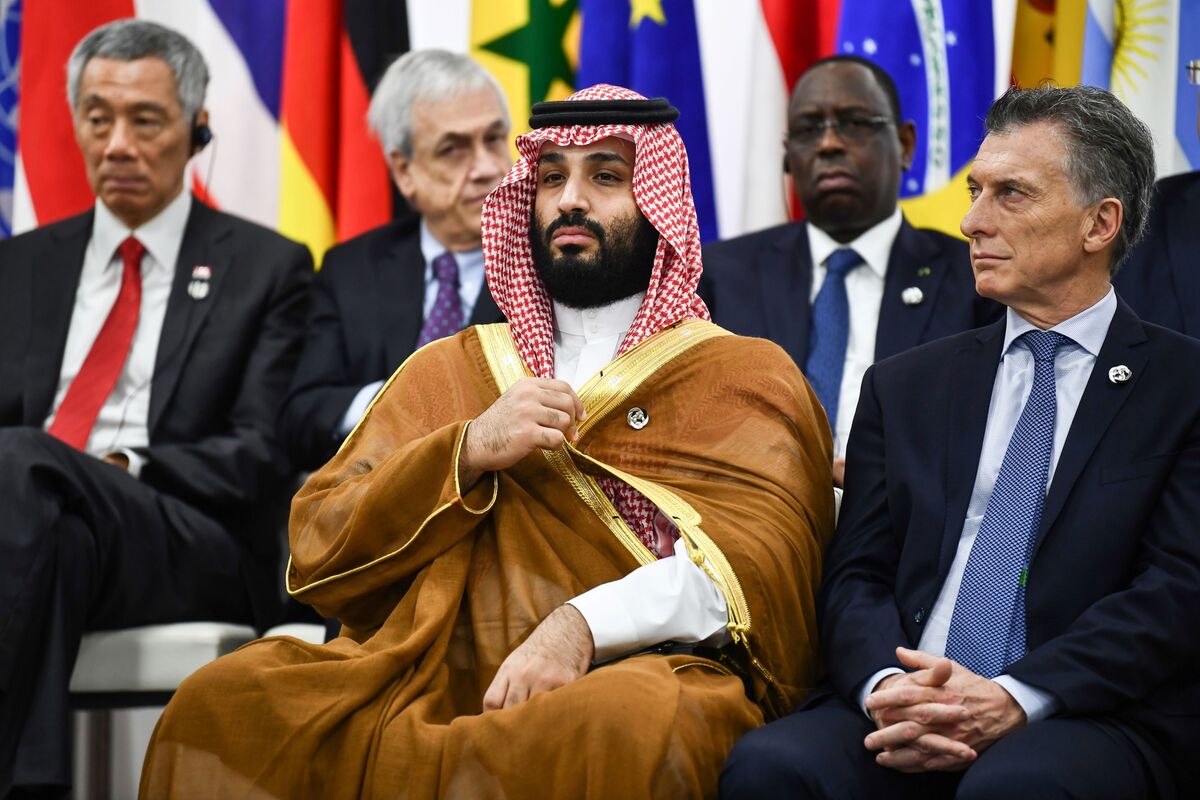
Saudi Arabia’s alarming rise in executions under Crown Prince Mohammed bin Salman is shocking, as the country recorded a historic 356 executions last year. One each day, almost.
And the Crown Prince Mohammed bin Salman is praised for his visionary actions.
The truth is that any nation governed by an Islamic regime poses a danger to its citizens and the global community. An Islamic stick has absolutely no mercy.
At least Donald Trump is right once when he questions the pseudo-liberal European countries.
Take another country, Afghanistan. The Taliban has formally entrenched a class-based justice system under a newly enacted Criminal Procedure Code signed by its supreme leader, Hibatullah Akhundzada.
The new code, issued on January 4, 2026, spans 119 articles across three sections and 10 chapters.
At the centre of the controversy is Article 9, which divides Afghan society into four categories: religious scholars (ulama or mullah), the elite (ashraf), the middle class, and the lower class. Under this system, punishment for the same crime is no longer determined primarily by the nature or gravity of the offence but by the social status of the accused.
According to the code, if an Islamic religious scholar commits a crime, the response is limited to advice. If the offender belongs to the elite, the consequence is a summons to court and advice. For those in the so-called middle class, the same offence results in imprisonment. But for individuals from the "lower class", the punishment escalates to both imprisonment and corporal punishment.
Taliban's new code openly embraces social stratification as a legal principle, turning courts into instruments for preserving and enforcing a rigid social order.
The class-based system is compounded by another deeply controversial element-- the code's repeated references to "free" persons and "slaves".
In several articles, including provisions on punishment, the law explicitly distinguishes between free individuals and enslaved ones,
The document does not recognise the right to a defence lawyer, the right to remain silent or the right to compensation for wrongful punishment. It relies heavily on "confession" and "testimony" as the main means of proving guilt.
By placing clerics and religious elites above the law, the Taliban has effectively announced that some people are untouchable, while others are permanently disposable.
Recent news from Iran highlights this. In Tehran, doctors are being detained for assisting in saving injured protesters during the country's harsh crackdown on anti-regime demonstrations. At least one surgeon faces the possibility of a death sentence.
Human rights groups describe the arrests and death sentence as part of a 'revenge' campaign, following healthcare workers and doctors refusing to overlook the suffering of severely injured protesters who were shot or stabbed at close range, and in some instances, established makeshift treatment centers.
Alireza Golchini, a 52-year-old Iranian surgeon, has been charged with “moharebeh” (waging war against God), a crime that can result in the death penalty, according to the rights group Hengaw based in Norway.
Since this was deemed insufficient, Iran’s judiciary chief has called on authorities to refrain from showing leniency towards protesters.
And why should Indonesia, the world’s largest Muslim-majority nation, be behind? It has reported what is probably one of the harshest punishments since the adoption of the strict Islamic law.
In Aceh province, Sharia police caned a man and a woman 140 times each for having sex outside marriage and consuming alcohol. They were struck on their backs with a rattan stick in a public park while dozens of spectators watched. The woman fainted from the punishment and was taken to an ambulance.
In total, the pair received 140 lashes: 100 for sex outside marriage and 40 for drinking alcohol.
It is thought to be among the highest numbers of cane lashes imposed since sharia was implemented.
The couple was among six individuals who were flogged for violating the Islamic code, including a sharia police officer and his female partner, who were found in close proximity in a private setting.
Caning is carried out in Aceh to punish a range of offenses, including gambling, drinking alcohol, engaging in gay sex, and having sexual relations outside marriage.
A friend who has a large business interest in Saudi Arabia was in Mumbai and shared a lot of oppressive stories.
These Islamic countries are hell on earth. The world will never be livable until it happens.
And I am furious to watch this gentleman, Crown Prince Mohammed bin Salman, being paraded as the most liberal ruler.
To hell with a world that worships such false individuals, making them gods.