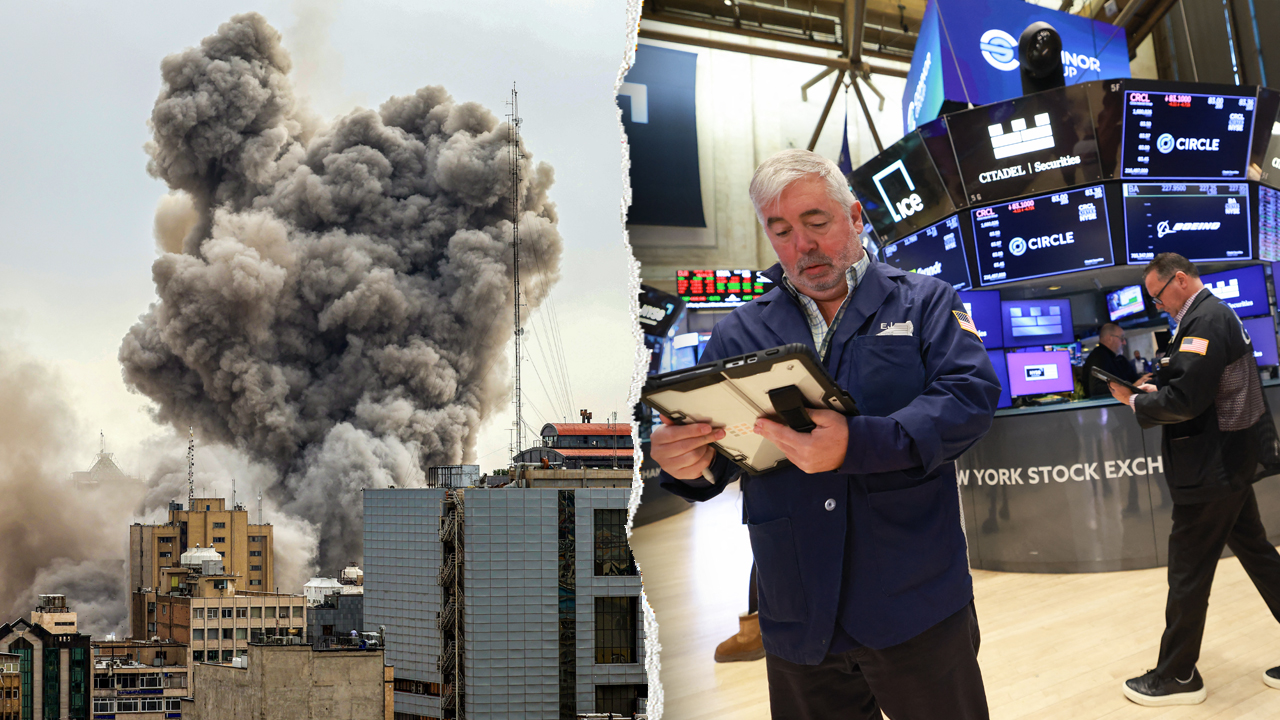
262. Who’s making money in the US-Iran war?
The US-Israel war in Iran has caused significant disruption around the world, but there are people who are making a huge amount of money. To say, they have been minting dollars.
There are bets, and there are well-timed trades in the markets that seem to be based on inside information and accurate predictions, with precise timing around major developments in the US-Israel war with Iran. These have resulted in significant windfalls.
Besides potential insider trading, huge online betting on Polymarket and Kalshi commodity derivatives, such as oil futures, where traders gamble on future oil prices, has enabled bets on virtually any news event. Remember, in all these contracts, insider information is the only way to make money.
Now, let us examine the hard facts available in the public domain –
It started on the very first day, February 27th. Sixteen bets, each for $100,000, accurately predicted the timing of the US airstrikes against Iran on 27 February.
It started on the night of 27 February, the day before the US and Israel would carry out strikes on Iran, an unusual influx of about 150 accounts on Polymarket placed bets that the US would strike Iran the next day. The bets totaled $855,000, with 16 accounts pocketing more than $100,000 each.
Public Citizen, a consumer advocacy group, filed a complaint with the Commodity Futures Trading Commission alleging that an anonymous Polymarket user, known as “Magamyman,” earned over $553,000 by betting on Khamenei's removal just before he was killed in an Israeli airstrike.
The complaint also references a crypto-analytics firm that pinpointed six suspected insiders who collectively made $1.2 million on Polymarket following Khamenei’s death.
Then on April 7, just before Donald Trump announced a temporary ceasefire with Iran, traders bet $950m that oil prices would fall, and it happened.
Numerous members of Congress and US federal agencies are targeting suspicious trading activities across various marketplaces.
On March 23, traders invested $580 million in the oil futures market, just 15 minutes before Trump announced on social media that the US was engaging in productive talks with Iran.
The same happened again on 7 April, this time when traders bet $950m on oil futures, expecting the price of oil to fall just hours before the ceasefire with Iran was announced.
The trading patterns and increased activity surrounding major events suggest more than just luck. The timing and scale of these bets strongly suggest that someone had insider information.
Many of these cases show signs of suspicious trades that would typically prompt investigation. However, US insider trading laws are complex, and new technologies that facilitate online betting create a detailed paper trail that can be difficult to trace.
I firmly believe that Donald Trump is well aware of these strategies, given his lifelong experience as a businessman. His actions and the timing of his posts clearly suggest he is closely involved with the aforementioned trades.
The question is: how can the authorities nail him?
The impact of Trump’s antics on his Social Media platform, Truth, is not limited to US markets but extends to all markets around the world.